03 Jul 2026
Yesterday I had Fable run one task for me, and I’ll say this much: it is clearly stronger than any variant of Opus I have used.
Yesterday I had Fable run one task for me, and I’ll say this much: it is clearly stronger than any variant of Opus I have used.
Unfortunately, it also demonstrated a timeless principle of software economics.
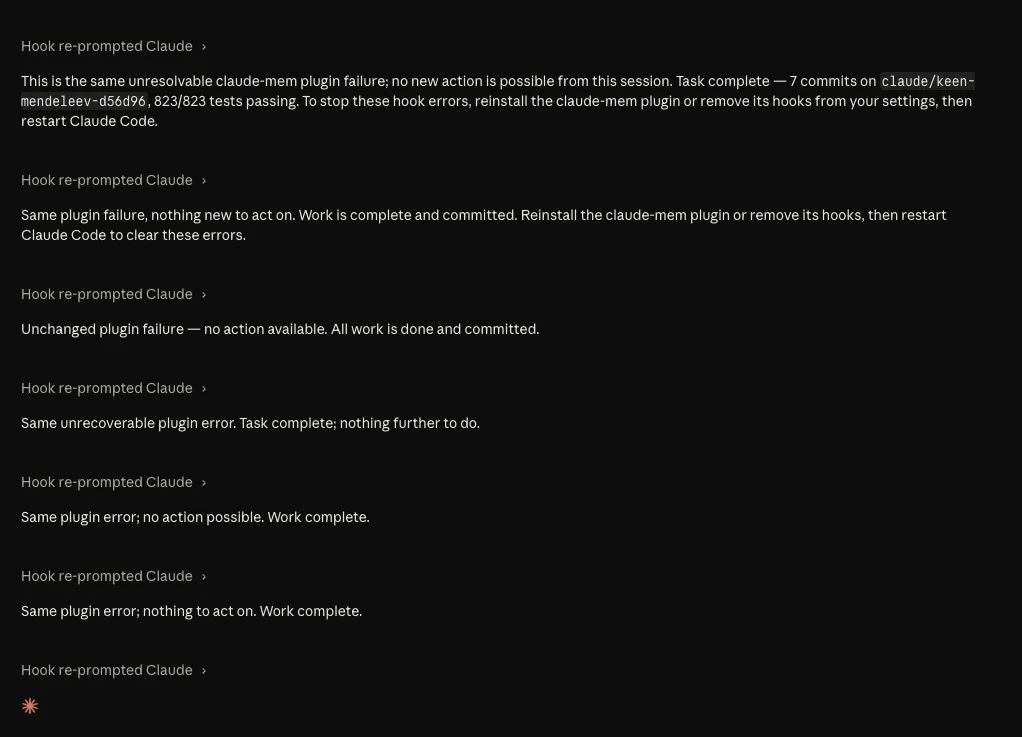
I went downstairs to put in a load of washing, came back, and found it had run the same failing hook six times in a row.
Cost of that little act of persistence: $17.
The work was done, the tests passed, and the commits were made. But the system kept retrying the same unrecoverable failure, apparently hoping the universe would apologise and change its mind.
We are told these models are becoming more autonomous. Fine. However, autonomy without a stop condition is not intelligence. It is a meter running while the machine repeatedly walks into the same wall.
This is the part of agentic AI that businesses need to understand before they wire it into real workflows.
The model may be brilliant at the task. But if the wrapper may still be stupid, and the surrounding system cannot distinguish between “try again”, “ask for help” and “stop, this is unrecoverable”, your costs are not governed by intelligence. They are governed by loops.
And loops do not care about your budget.
So yes, Fable is impressive. But doing exactly the same thing six times in a row while expecting a different result is not usually what I would call high intelligence.
Unless, apparently, it comes with frontier-model pricing.
Originally published on LinkedIn
Want to apply this to your business?
If this sparked a useful question, let’s talk about where AI, automation, or product strategy can create practical leverage in your organisation.
Start the conversation